release
Chubby rehabbed pup Paz returns home to Puget Sound
Mar/08/16 12:07 PM
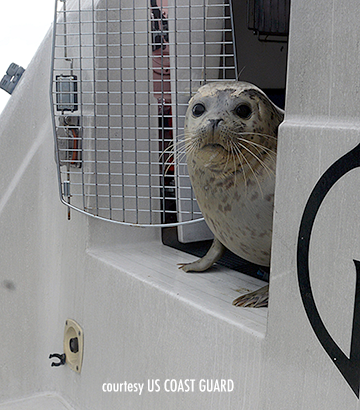
In December, the female pup was suffering from seizures on a cold and wet afternoon at Jack Block Park, notorious for illegally off-leash dogs. Seal Sitters first responders, authorized members of NOAA’s West Coast Marine Mammal Stranding Network, transported the hypoglycemic and largely unresponsive pup for evaluation at the Lynnwood facility, fearing she would require euthanasia. PAWS rehabbers were able to stabilize and hydrate her and Paz began a long recovery after a tenuous couple of weeks.
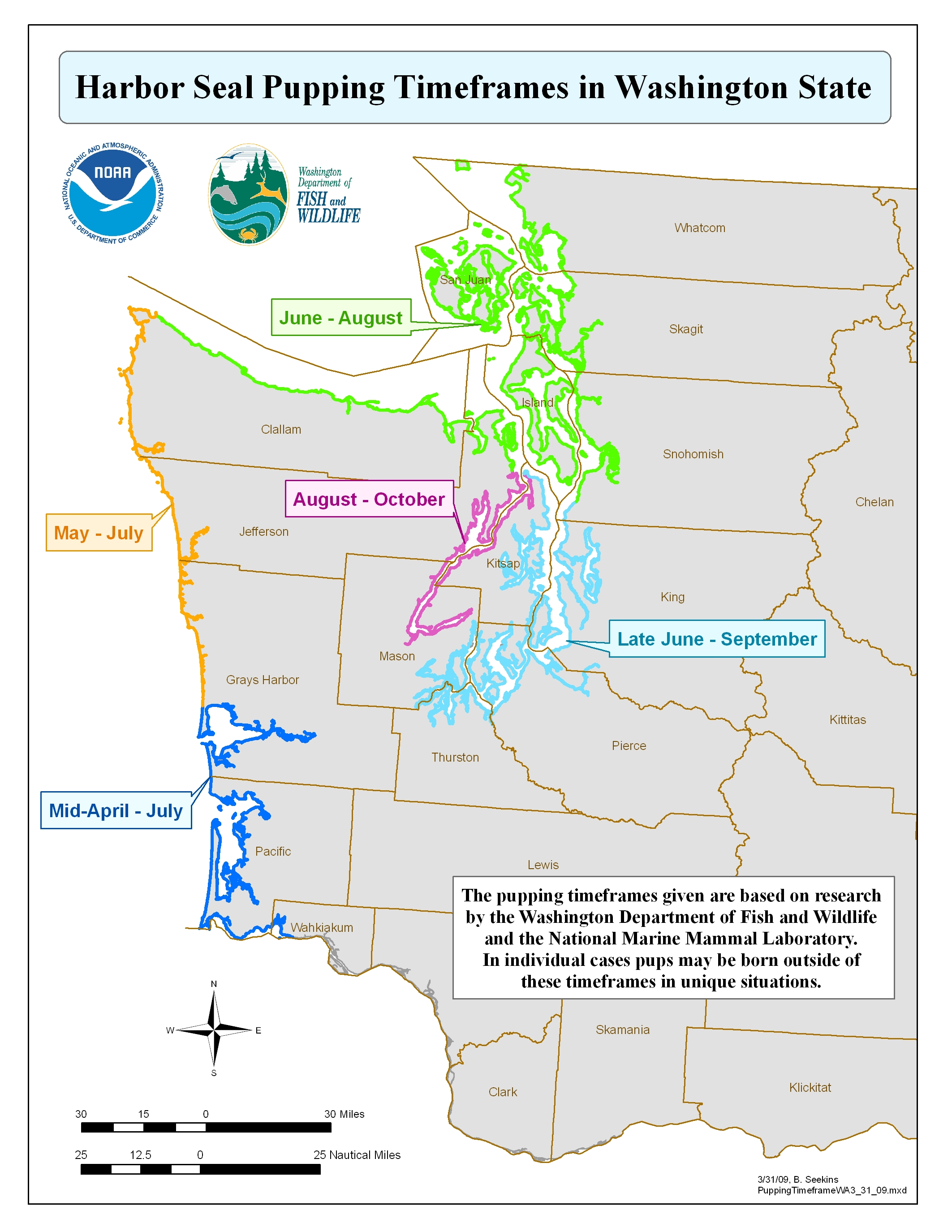
Severely emaciated and weighing only 12.8 kgs when rescued, the estimated 7-9 month-old pup was a true “blubberball” at her release on Monday, tilting the scale at 35 kgs (75 lbs). Pups are weaned around 4 weeks of age and are then entirely on their own, often struggling to survive wet fall and winter months. Click here to view a map of harbor seal pupping season in Washington.
It should be noted that only members of NOAA’s Marine Mammal Stranding Network - or their authorized agents - can legally handle and transport marine mammals. It is a violation of Federal Law to touch, feed, move or harass marine mammals. If you see a seal pup on the beach, please contact your local stranding network (network map here).
Thanks to PAWS dedicated staff for nursing the pup back to health. Huge thanks as well to the US Coast Guard Auxiliary boat crew that released Paz back where she belongs, the culmination of a true team effort (view a video of the release on USCG Facebook page).
Seal pup Little Dipper returned to the wilds of Puget Sound
Oct/17/15 08:01 AM
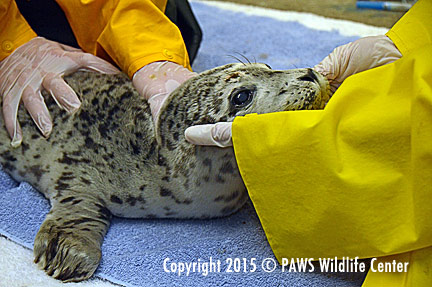
Little Dipper’s stint of rehabilitation at PAWS Wildlife Center (intake exam photo at left) was a bit longer than a typical two-month duration because he was slow to pack on weight. A newborn seal pup in rehab must be taught to eat whole fish since they are not able to learn from other seals in the wild. When finally released on October 9th, he weighed over 30 kgs (66+ lbs) - a true blubberball! The pup weighed only about 18 lbs when taken in for stabilization and treatment.
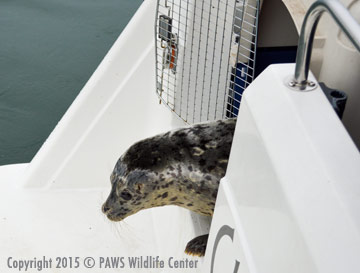
Little Dipper was released, along with another rehabilitated seal pup, near a harbor seal haulout. The photo at right shows Little Dipper emerging from his kennel on the boat transom, seconds before plunging into the water and swimming off. We so hope that these two young pups navigate the waters successfully and thrive together in the vast expanse of Puget Sound - and find safety when resting onshore.
Seal Sitters MMSN extends heartfelt thanks to the dedicated staff at PAWS for giving Little Dipper a second chance at life and generously providing photos to share with volunteers and the public.
If you see a seal pup (or any marine mammal) with a tag and are able to get the number thru binoculars or with a telephoto lens at a distance, please forward the location information and photos to Seal Sitters.
Rescued and rehabbed pup Junebug goes home to the wild
Sep/18/14 06:10 PM
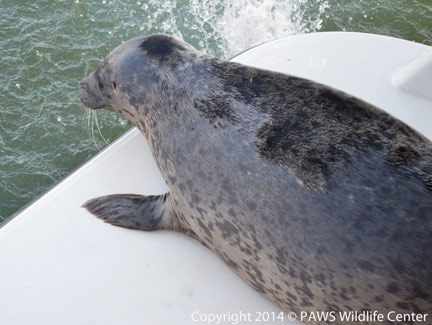
The abandoned and estimated only 5-8 day old pup was rescued by Seal Sitters MMSN from West Seattle’s Duwamish Head on July 1st. He weighed only 8.6 kg upon intake at the Lynnwood urgent care facility. Junebug was a whopping 31.1 kg on release day (see photo courtesy of PAWS). The tubby pup was released at a known harbor seal haulout near Everett with the help of the Coast Guard.
Rehab for newborn seal pups - and weaned pups - is a lengthy process, as indicated by Junebug’s two-month stay at PAWS. There is no evidence that a fattened up rehab pup has greater odds of survival than wild-weaned ones. All pups face 50% mortality their first year and some would argue that a week-old rehabbed pup who has not been taught to forage in the wild faces even worse odds.
In late January of 2013, Seal Sitters’ first responder noticed a red tag on a pup resting near Salty’s on Harbor Avenue (rehab tags changed from red to orange in 2014). A check in the stranding network database revealed that the pup, whom volunteers nicknamed Ruby, had been rehabbed at PAWS and released in October of 2012 at a harbor seal haulout south of Tacoma. Ruby had made the long trek to Seattle and Seal Sitters volunteers watched over her almost every day - keeping her safe from disturbance - for the next few months at West Seattle’s Jack Block Park. She befriended another weaner pup nicknamed Buddy at the park, but they finally travelled on at the end of April.
The Marine Mammal Stranding Network would like to receive reports which include i.d. numbers of tagged seals, dead or alive. With respect to harbor seal pups, these reports are extremely helpful in determining the survival rate of rehabilitated animals.
Thanks so much to PAWS Wildlife Center and their awesome staff for giving Junebug a second chance at life!
Seal pup rescued by Seal Sitters returns home to Puget Sound
Nov/25/13 10:51 AM
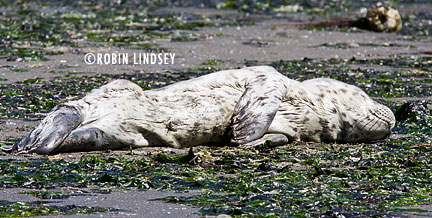
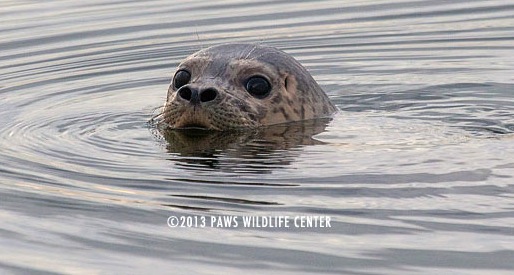
We are thrilled to report that Snapper weighed a whopping 73 lbs when released - a true blubberball. This fat layer will help sustain the pup as he learns to forage in the huge expanse of Puget Sound. Huge flipper hugs to PAWS’ dedicated and amazing staff and the Coast Guard!
Satellite Sandy spreads her wings in the Salish Sea
Feb/16/12 09:47 PM
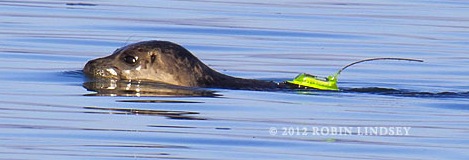
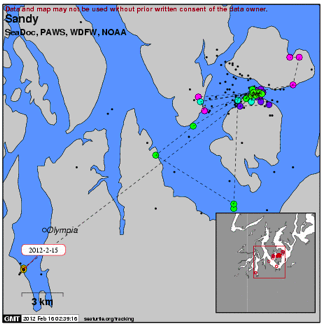
You can follow Sandy’s travels on SeaDoc’s website. In fact, you can even get an email alert when passing satellites pick up her signal. Check out Sandy’s dedicated page here. And, if you happen across a log boom, grab your binocs and see if there is a seal or two catching some zzzz’s - maybe you’ll even see Sandy with her fancy yellow hat!
Seal pup Sandy released back into the wild
Jan/31/12 05:52 PM
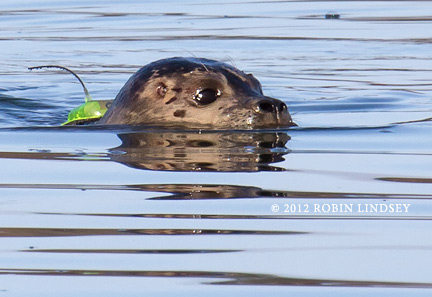
Sandy’s movements will provide ground-breaking information for biologists. She can be tracked by the public as well on SeaDoc Society’s website, which has a web page dedicated to her, showing a map of her cruising around South Puget Sound. In the photo above, Sandy swims in the wild with her new satellite hat. Tracking this animal would not be possible without the collaboration of several network groups which include: Seal Sitters MMSN, PAWS Wildlife Center, WDFW Marine Mammal Investigations, SeaDoc Society and NOAA’s Protected Resources Division.
PUPDATE: Feb 2/2012
We have had some folks with concerns that the satellite tag is somehow harmful for Sandy. The tag is applied with glue to Sandy’s pelt and will fall off when she sheds her fur during molting season in a few months. Most likely, the tag will fall off before then; however, in the interim, the satellite tracking will provide researchers with insights into foraging patterns, distances travelled by weaned pups and health and mortality data. This research will help other seal pups in the future.