Oct 2009
Halloween pup at Lincoln Park
Oct/31/09 08:09 PM
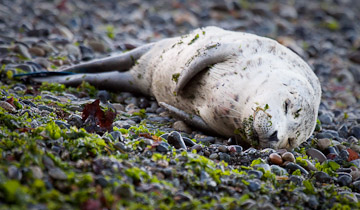
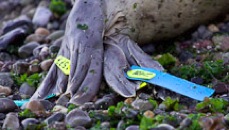
Blood samples are tested for diseases and other health perameters. Unfortunately, harbor seals are considered the barometers for the health of Puget Sound. Harbor seals in particular are affected by pollution because they do not migrate, but instead, live year-round in our region and eat smaller fish that live in our waters. Read More...
Open wide!
Oct/19/09 10:31 AM
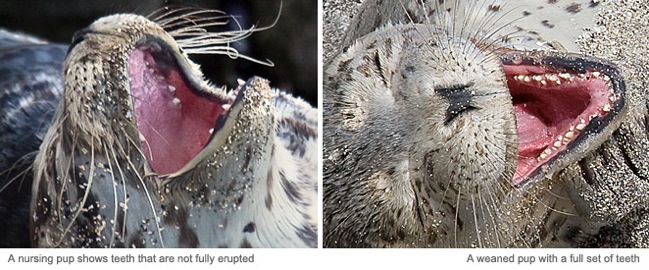
How do we estimate the age of a seal pup? Through photos of their teeth. Seals have between 34 and 36 teeth. The front teeth are sharp and used for grasping and tearing food, while the back teeth are used for crushing.
A nursing pup does not yet have all of his teeth, much to the relief of mom! In order to tell if a pup is weaned, our photographer tries to get photos of each pup when they yawn so we can count the number of teeth. This requires alot of patience, a long telephoto lens and a bit of luck. By the time pups show up in West Seattle, they are usually newly weaned; however, we do get some nursing pups as well. Why is it important for Seal Sitters to know if a pup is still nursing? Because it is imperative that mom is not discouraged from returning for her pup. This means keeping the area especially quiet of crowds and noise. Pups are weaned between 4 - 6 weeks of age.
A nursing pup does not yet have all of his teeth, much to the relief of mom! In order to tell if a pup is weaned, our photographer tries to get photos of each pup when they yawn so we can count the number of teeth. This requires alot of patience, a long telephoto lens and a bit of luck. By the time pups show up in West Seattle, they are usually newly weaned; however, we do get some nursing pups as well. Why is it important for Seal Sitters to know if a pup is still nursing? Because it is imperative that mom is not discouraged from returning for her pup. This means keeping the area especially quiet of crowds and noise. Pups are weaned between 4 - 6 weeks of age.
Small pup rests today
Oct/12/09 10:03 PM
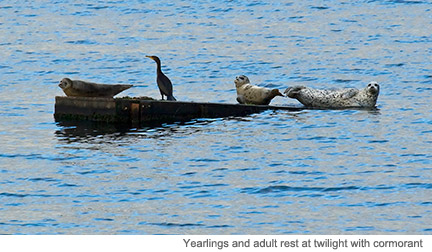
Life rafts for seals
Oct/07/09 10:11 AM
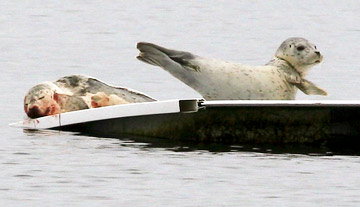
No confirmed cause of death for "Alki"
Oct/06/09 06:34 PM
WA Fish and Wildlife biologist reports that there was no significant finding for cause of death for “Alki”. She was “markedly thin” but had a few shrimp and crab parts in her stomach, and small lacerations on her flipper and nose. There was no visible evidence of worms or parasites, though oftentimes parasites are of a microscopic nature. Tissue samples were sent out for further study.
"Luna" dies
Oct/06/09 06:26 PM
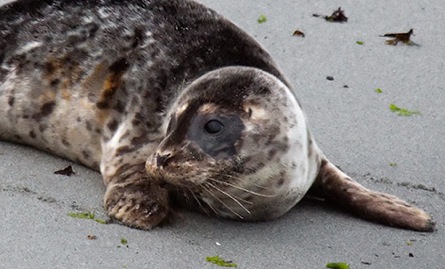
Luna is shown here returning to the Sound at first light on September 24th, robust and with no telltale signs of health issues. Unfortunately, a pup’s health can rapidly deteriorate and often leads to death within only a few days. The mortality rate of seal pups is 50%. A weaned pup is particularly at risk because they are not getting proper nourishment. They are still trying to learn the skills of how to catch food and survive. The blubber fat storage that they gained from nursing is gradually consumed for energy. As they become thinner and weaker, their immune systems are compromised and they become prime targets for opportunistic parasites and infections. Seal Sitters cannot stress enough the importance of letting these little pups have undisturbed periods of time onshore. Because, truly, the seemingly healthy pup you see today, could be in serious jeopardy tomorrow.
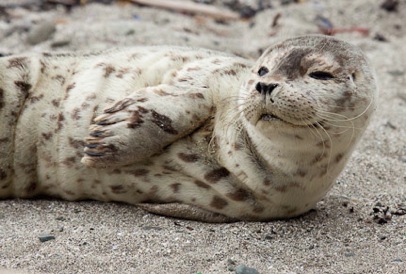
Pup enjoys afternoon on the beach
Oct/05/09 09:02 PM
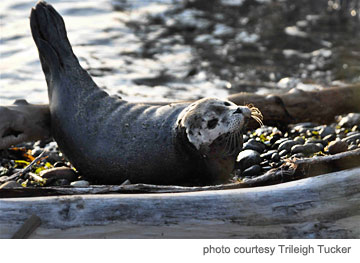
Seal pup "Luna" taken to PAWS
Oct/01/09 03:02 PM
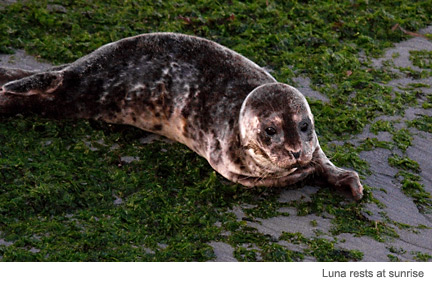
Luna had hauled out daily at a West Seattle beach over the past week or more, returning to the water to forage on a regular basis ~ typical behavior for a seal pup. He was chubbier than most of the pups we have had on our shore thus far this season. However, his haulout pattern changed over the last few days and he was more reluctant to return to the water to feed. He began to lose weight and exhibited signs of compromised health ~ green discharge from the eyes, nose and mouth. Yesterday’s photos revealed what appeared to be fishing line from his mouth; however, this morning no line was found. Kristin stated upon exam that he was bleeding from a wound in the mouth that could have indeed been caused by fishing gear.
Luna showed a bit of spunk when picked up from the beach; a good sign that he might be able to fight his way back to good health. Also, fair warning that a pup who is seemingly quite lethargic and extremely ill can cause severe injury to someone who is not trained at proper procedure. Seal Sitters wants to stress that a seal pup (or any other marine mammal) should never be touched, fed or removed from a beach. They are protected by the Marine Mammal Protection Act. Only personnel authorized by NOAA can approach a seal.
We would also like to thank the public for being respectful of Luna’s little spot on the beach and giving him a quiet space to rest.
Please continue to check our blog for updates on Luna’s condition and keep him in your thoughts.